



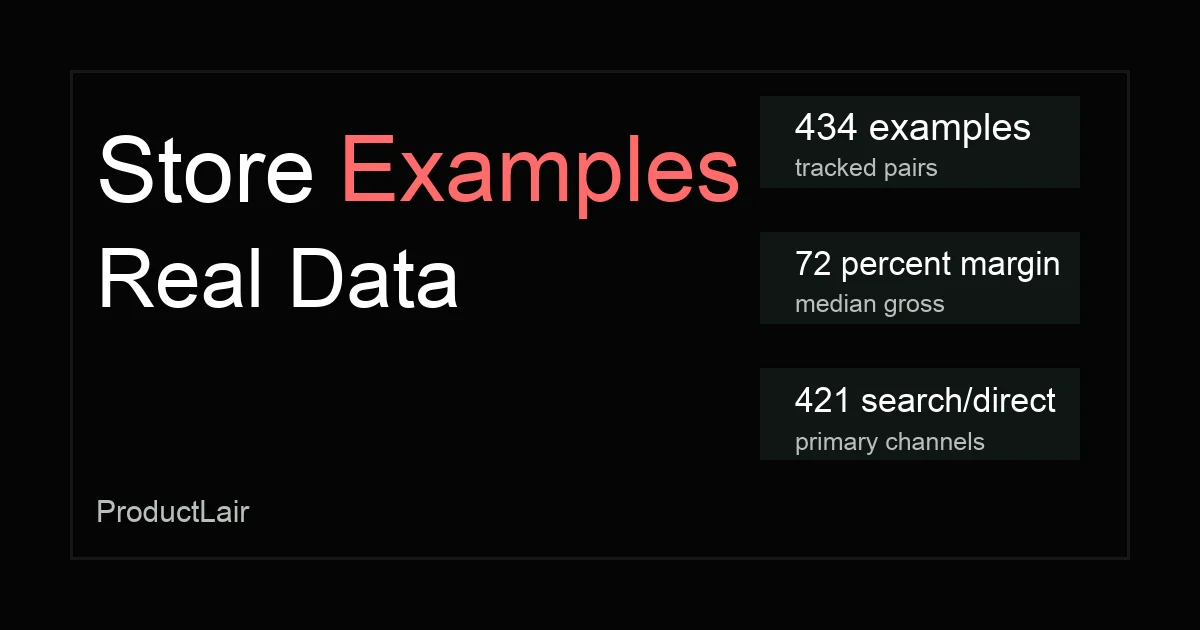
Dropshipping Store Examples 2026 (Real Store Data)
We analyzed 434 dropshipping store examples to compare real margins, traffic channels, product fit, and what successful Shopify stores do differently.

We rated 12 dropshipping suppliers on reliability, shipping speed, and margins. Includes scam red flags and our Supplier Reliability Index.
Summarize with:
I've helped hundreds of new store owners find suppliers. The #1 mistake I see? Picking the first supplier they find and hoping for the best. That's how you end up with angry customers, refund requests, and a store that fails within months.
In this guide, I'll show you exactly how to find good suppliers and avoid the bad ones. You'll get our data on 12 popular suppliers, a simple 5-step checklist to test any supplier, and the warning signs that scream "stay away."
The dropshipping market hit $343 billion in 2026 and grows 22% every year, according to Statista's e-commerce data. That's a huge opportunity. But here's the problem: 80-90% of new dropshippers fail in their first year.
Why? Bad suppliers.
of dropshippers say finding good suppliers is their biggest challenge
say shipping delays hurt them most
suppliers tested before finding one that works
A bad supplier doesn't just mean slow shipping. It means chargebacks (when customers dispute charges with their bank), bad reviews, frozen PayPal accounts, and a dead business. Our quality control data across 5,943 products shows that Pet Supplies has 2x the quality risk of any other category, so supplier vetting matters even more in high-risk niches. Our shipping times analysis of 221 products shows the median delivery is 13.5 days, and choosing the wrong supplier tier can push that past 20 days.
Real Example: One seller on r/dropship shared how their supplier stopped replying after 200 orders. They lost $7,500 in refunds and got their PayPal frozen. Don't let this happen to you.
The good news? You can spot bad suppliers before they cost you money. Here's how.
Before you start searching, you need to know what you're looking for. There are three main types of suppliers, and each works differently.
Think of these like Amazon, but for suppliers. You browse products from thousands of sellers, pick what you want, and the marketplace handles the payment.
Popular ones: AliExpress, Spocket (see Spocket alternatives), Modalyst
Good for: Beginners who want to test lots of products without big commitments
Downsides: Less control over quality. Longer shipping from China. Everyone else sells the same stuff.
These are middlemen who do the hard work for you. They find factories, check product quality, store your items in their warehouse, and ship orders. You pay a bit more per item, but you save tons of time.
Popular ones: CJDropshipping, Zendrop, HyperSKU
Good for: Growing stores that need faster shipping or custom packaging (like your logo on the box)
Downsides: Costs more per item. Some need minimum orders for the best prices.
These are traditional suppliers, often based in the US or Europe. They sell products at bulk prices with fast domestic shipping.
Popular ones: Doba, Wholesale2B, DropCommerce
Good for: Stores targeting US/EU customers who expect fast delivery (3-7 days). With tariffs adding 30-54% to Chinese goods, US/EU wholesalers are increasingly competitive on total landed cost for categories like health, beauty, and home goods.
Downsides: Higher product costs. Smaller product selection. Some charge monthly fees.
| Type | Shipping Speed | Product Cost | Best For |
|---|---|---|---|
| Marketplace | 12-25 days | Lowest | Testing products |
| Agent | 7-15 days | Medium | Scaling up |
| Wholesaler | 3-8 days | Highest | Fast US shipping |
Not sure which type fits your store? Start with our dropshipping suppliers directory to compare marketplaces, sourcing agents, fulfillment apps, and wholesale directories. Then use the supplier comparison tool to filter by shipping speed, location, and price range.
I got tired of reading the same generic "top 10 supplier" lists that don't actually compare anything useful. So we built our own database.
We tracked 12 popular suppliers and scored them on what actually matters: Do they ship on time? Do they respond to messages? Do orders arrive without problems?
Here's what we found:
| Supplier | Type | Reliability | Shipping | MOQ | Rating |
|---|---|---|---|---|---|
| CJDropshipping | Agent | 92% | 7-15 days | 1 unit | 4.5/5 |
| Spocket | Marketplace | 90% | 3-7 days | 1 unit | 4.4/5 |
| Doba | Wholesale | 89% | 3-8 days | 1 unit | 4.0/5 |
| HyperSKU | Agent | 88% | 8-15 days | 1 unit | 4.3/5 |
| Zendrop | Agent | 87% | 5-15 days | 1 unit | 4.1/5 |
| AliExpress | Marketplace | 85% | 12-20 days | 1 unit | 4.2/5 |
| Wholesale2B | Wholesale | 84% | 5-10 days | 5 units | 3.9/5 |
| Modalyst | Marketplace | 83% | 5-12 days | 1 unit | 4.0/5 |
MOQ means "minimum order quantity" - how many items you need to buy at once. Most suppliers let you order just 1 unit, which is great for testing.
Compare All 12 Suppliers
Filter by type, shipping time, pricing, and more. Free to use.
Open Supplier Comparison ToolWhat I learned from this data:
Now let's get practical. Here are seven methods I've used (or seen work) to find suppliers worth working with.
Directories are like pre-screened dating apps for suppliers. Someone already checked that these suppliers are real and legit. If you want a side-by-side look at the best supplier research tools, we ranked the top platforms by features, pricing, and supplier quality.
Best directories:
Pro Tip: Directories charge fees ($30-70/month or one-time), but think of it as insurance. One scam supplier can cost you thousands. A directory fee is cheap protection.
Once you find a product that sells, agents help you scale. They'll find you better prices, faster shipping, and can even put your logo on packaging.
Top agents:
When to use an agent: After you've sold 20-50 units of a product and know it works. Agents make sense when you need speed or custom branding.
AliExpress has millions of products at rock-bottom prices. But it's also full of bad sellers. Here's how to find the good ones:
My AliExpress checklist:
Important: Not every AliExpress seller allows dropshipping. Some will put their invoice in the package with the wholesale price. Always message them first and ask: "Do you support dropshipping with no invoice?"
This is advanced, but if you're doing serious volume (100+ orders/month), going straight to the factory cuts out the middleman.
Where to find factories:
Reality check: Factories usually want bigger orders (100+ units minimum) and won't hand-hold you through the process. This isn't for beginners, but if you're already doing volume, these relationships are the first step toward private labeling your best-selling products.
Simple Google searches can find suppliers that aren't on the big platforms.
Search queries that work:
[product] dropship supplier[product] wholesale USA[product] private label[niche] dropshipping programPower move: Add -AliExpress -Amazon -eBay to your search. This filters out marketplace results and shows you direct suppliers.
Real dropshippers share real experiences in communities like r/dropship and r/dropshipping.
What to look for:
Watch out: Some "recommendations" are paid ads in disguise. If someone only has good things to say with no specifics, be suspicious.
This is old school but still works. Trade shows let you meet suppliers in person, touch products, and negotiate face-to-face.
Big ones worth knowing:
Is it worth it? If you're spending $10k+/month with suppliers, yes. The relationships you build in person beat any online connection.
Found a supplier that looks promising? Don't send money yet. Run them through these five checks first.
Most people skip this and regret it later. Don't be most people.
What to look for:
Red flag: If they won't share basic business info, walk away. Real companies have nothing to hide.
This is the most important step. Never, ever sell a product you haven't held in your hands.
My sample testing process:
Budget: Set aside $50-100 for samples. It's the best money you'll spend.
Calculate your sample costs and potential margins with our profit margin calculator.
Shipping costs can kill your profits if you don't plan ahead. And they change based on where you're shipping from and to.
Use our shipping calculator to get real numbers, but here's a quick reference:
| Route | Cheap Option | Fast Option |
|---|---|---|
| China to US | $3-8 (12-20 days) | $15-40 (5-10 days) |
| China to UK | $4-10 (15-25 days) | $20-50 (5-12 days) |
| US to US | $5-12 (3-7 days) | $15-30 (1-3 days) |
Hidden costs people forget:
Send them a message with questions. How they respond tells you everything about how they'll handle problems later.
My communication test:
What good communication looks like: Clear answers within 24 hours. They address your specific questions. They're helpful, not pushy.
What bad communication looks like: Days to respond. Vague answers. Pressure to buy now. Can't answer basic questions about their products.
Don't guess. Do the math.
The formula:
Your Real Cost = Product + Drop Fee + Shipping + Payment Fees

Profit Margin = (Selling Price - Real Cost) ÷ Selling Price × 100
Real example:
Target: Aim for 30-40% profit margin minimum. Below 30%, you don't have enough cushion for returns, refunds, and ads. Use our profit calculator to run the numbers.
Calculate Your Actual Margins
Plug in your numbers and see if a product is actually profitable.
Open Profit CalculatorScammers are everywhere in dropshipping. Here's how to spot them before they take your money.
If their prices are 40%+ below everyone else, something's wrong. They're either selling fakes, bait-and-switching with garbage quality, or planning to disappear with your money.
What to do: Compare prices across 5+ suppliers. The average is usually the real price.
Real suppliers have business licenses. Scammers don't.
What to do: Ask for their business registration. If they dodge the question or get defensive, run.
Legit suppliers accept credit cards and PayPal. Scammers want wire transfers, Western Union, or cryptocurrency because those payments can't be reversed.
Safe payment methods: Credit cards, PayPal, or the platform's built-in payment (like Alibaba Trade Assurance).
Scammers steal photos from real suppliers or use stock images.
What to do: Drag their product images into Google Images or TinEye. If the same photos show up on 50 other sites, that's suspicious.
Real businesses have verifiable contact info. Scammers hide behind anonymous email addresses.
What to do: Google their address. Call their phone number. If nothing checks out, move on.
"This price is only good today!" or "We're almost sold out!" - these are manipulation tactics designed to make you act before thinking.
What to do: Any real offer will still be there tomorrow. If they pressure you, that's your sign to slow down.
Ask about shipping times, return policies, or product specs. Scammers give vague or evasive answers because they don't actually have the products.
What to do: If you can't get a straight answer to a simple question, find someone else.
Real suppliers have written policies for returns and refunds. Scammers avoid putting anything in writing.
What to do: Get the return policy in writing (email or chat) before you place any orders.
Search "[supplier name] review" and "[supplier name] scam."
Red flags: All 5-star reviews that sound the same. No reviews at all. No social media presence. No one on Reddit or forums has heard of them.
This causes more customer complaints than anything else. Here's the truth about shipping:
| Supplier Type | What They Say | Reality | If Things Go Wrong |
|---|---|---|---|
| AliExpress | 15-30 days | 18-35 days | 40-60 days |
| CJDropshipping | 7-15 days | 10-20 days | 25-35 days |
| Spocket (US/EU) | 3-7 days | 5-10 days | 12-18 days |
| US Wholesalers | 2-5 days | 3-7 days | 8-14 days |
The stats:
My Rule: Whatever the supplier quotes, add 5 days when you tell customers. If they say 7-15 days, tell customers 12-20 days. Under-promise and over-deliver. Customers are happy when packages arrive "early."
Estimate your shipping costs by route with our shipping calculator.
Let me share a real example. Sarah (name changed) started her home decor store in early 2026.
Her first attempt: She found a supplier on AliExpress with great prices and placed 30 orders. Half arrived damaged. The supplier blamed shipping. Customers were furious.
What she did differently:
The result: CJDropshipping won. Slightly higher prices than AliExpress, but:
Six months later, she's doing $15k/month with a 34% profit margin. The extra $1-2 per product was worth it.
Finding a supplier is step one. Building a relationship that grows your business takes ongoing work.
A quick weekly message keeps you in the loop on stock issues, delays, or new products. It also keeps you on their radar as someone who matters.
Suppliers remember who pays promptly. They'll prioritize your orders, offer better rates, and solve problems faster.
Tell them when products arrive damaged. Tell them when customers love something. Good suppliers use this info to improve. Staying in close contact also helps you catch quality fade early, before silent material swaps turn into chargebacks.
Once you're sending 50+ orders per month, you have leverage. Ask for better pricing, faster shipping options, or custom packaging. Our supplier negotiation guide breaks down exactly how much a 10% cost reduction adds to your margins, with benchmarks by category.
Never put all your eggs in one basket. If your main supplier has issues (factory fire, shipping delays, quality drop), you need a backup ready to go. Keep 2-3 suppliers vetted and ready.
Start with 1-2 to keep things simple. As you grow, expand to 3-5 for variety and safety. Most successful dropshippers test 4-6 suppliers before finding their long-term partners. You don't need more than that - it just adds complexity.
Both have their place. Chinese suppliers (like AliExpress) offer lower costs and huge variety - great for testing products. US suppliers (like Spocket or Doba) cost more but ship in 3-7 days instead of 15-30. Many successful stores use Chinese suppliers for testing, then switch to US suppliers for winners.
Ask them directly. Say: "Do you support dropshipping? Can you ship without invoices or your branding?" Not all wholesalers allow it. Some will include their invoice showing the wholesale price - your customer sees what you paid. Always confirm before listing their products.
Target 30-40% minimum after all costs (product, shipping, drop fees, payment processing). This typically leaves you 15-20% net profit after ads and returns. Below 30%, you have no cushion for problems. Use our profit calculator to check your numbers before committing.
Plan for 2-4 weeks if you do it right. That includes: researching options (3-5 days), ordering and receiving samples (7-14 days), testing communication (2-3 days), and calculating real costs (1 day). Rushing this is the #1 cause of supplier problems.
This is exactly why you need backup suppliers. If one goes silent: 1) Immediately stop selling their products, 2) Contact customers with pending orders and offer refunds or alternatives, 3) Report the issue to your payment processor, 4) Document everything in case of disputes. Then switch to your backup.
You now know how to find suppliers and separate the good ones from the bad. The next question is: what products should you sell through those suppliers?
That's where most people get stuck. They find decent suppliers but waste money on products nobody wants to buy.
ProductLair fixes this. We analyze real sales data from Amazon and eBay to show you what's actually selling. Our 16-point scoring system rates products on demand, competition, and profit potential - so you're not guessing.
Stop Guessing What to Sell
Find products with proven demand and real profit margins. Free trial available.
Find Winning ProductsWe analyzed 434 dropshipping store examples to compare real margins, traffic channels, product fit, and what successful Shopify stores do differently.
Copy a dropshipping return policy template backed by 424 real products, shipping windows, refund-without-return rules, supplier terms, and category risk.
Is Amazon dropshipping profitable in 2026? See fee math from 5,943 products, review pressure, supplier risk, and margin rules before listing.